Dogecoin Price Prediction 2026: Structural Decay Beneath a Fading Meme Cycle
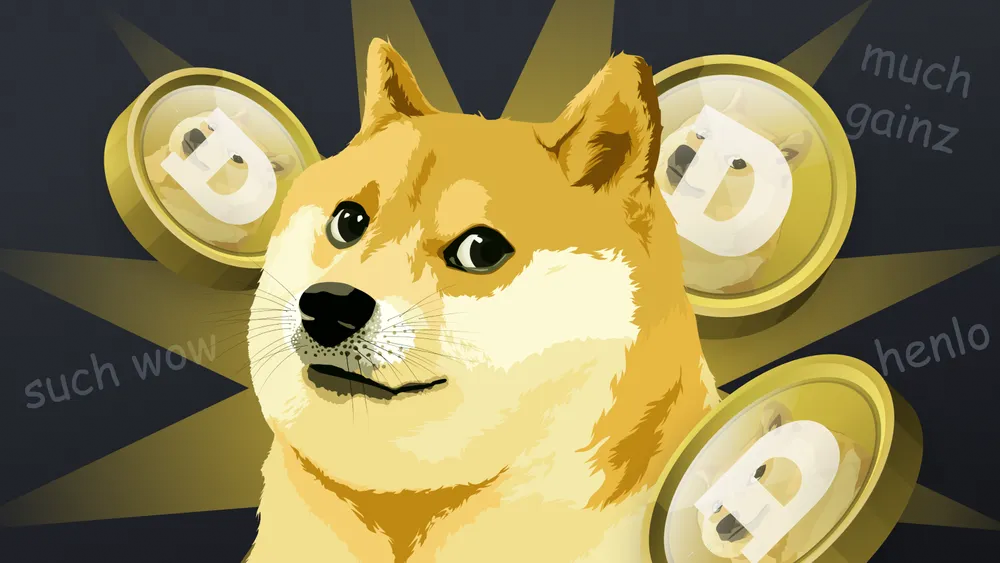
The 2026 market cycle is delivering a harsh verdict on assets defined by high inflation and stagnant innovation. While “X Payments” rumors provided a temporary liquidity lifeline in late 2024, that spark failed to ignite a sustained rally in early 2026. This failure has exposed Dogecoin as a “Legacy Meme”—an asset relying on aging narratives in a high-speed market that has fundamentally moved on.
Investors have realized that the “X Integration” was a classic “buy the rumor, sell the news” event. Instead of a “DOGE Standard,” the platform prioritized fiat and stablecoin rails for regulatory compliance. Consequently, liquidity is aggressively rotating from legacy tokens like Dogecoin to high-beta ecosystems on Solana and Base.
Table of Contents
Fundamental Outlook: Why Dogecoin (DOGE) Faces Structural Headwinds
Inflationary Gravity is Unavoidable
At its core, the problem with Dogecoin is mathematical. Unlike Bitcoin’s capped supply or Ethereum’s burn mechanics, DOGE is structurally inflationary.
- Supply Reality: Approximately 10,000 DOGE are mined every minute, adding roughly 5 billion new tokens to the circulating supply annually.
- 2026 Implication: In 2026, with a circulating supply exceeding 168 billion tokens, this constant issuance acts as a persistent anchor on price. To simply maintain a price of $0.15, the market must absorb over $750 million in new supply every year. Without massive new demand, inflationary gravity inevitably takes control.
Sentiment Fatigue and the Fading “Elon Effect”
Dogecoin has never been priced on utility or network cash flows; its value is a derivative of retail enthusiasm and celebrity attention. However, as of early 2026, the “Elon effect” has reached a point of diminishing returns.
- X Payments Reality: X Payments has rolled out as a fiat-centric, compliant framework. Dogecoin has not emerged as a primary settlement layer or reserve asset within that ecosystem.
- Volatility Decay: Social media mentions that once triggered 30% upside now produce single-digit “blips” that are sold off almost immediately.

Macro Pressure and Capital Rotation
In a tightening liquidity environment, Dogecoin typically underperforms due to its high beta and lack of defensive fundamentals. Capital is currently retreating from speculative extremes and flowing into newer projects integrated with AI narratives or embedded utility, leaving DOGE as a “stranded asset.”
Dogecoin Trading Insights & Strategic Plan
The current technical structure indicates a bearish trajectory. Dogecoin is struggling to hold the psychological $0.12 floor, with a clear path toward the $0.08–$0.05 support zone by mid-2026.
| Parameter | Trading Level / Strategy |
| Strategy | “Short the Pop” – Fade relief rallies into overhead resistance. |
| Entry Zone | Sell into lower high resistance between $0.1450 – $0.1550. |
| Stop-Loss | $0.170 – A reclaim of the 200-day moving average invalidates the bear case. |
| Target 1 | $0.10 – Major psychological and historical demand zone. |
| Target 2 | $0.055 – Pre-2021 breakout levels; the “Fair Value” target if hype subsides. |
Summary: The End of the Meme Mania?
Dogecoin is fighting a losing battle against supply math and market relevance. With the “X Payments” dream largely priced in as a non-event for crypto utility, DOGE remains an expensive legacy asset with infinite supply. The most consistent trade for mid-2026 remains fading rallies near $0.16 and positioning for a flush toward single digits.
Frequently Asked Questions (FAQ)
1. Is Dogecoin still a good long-term investment in 2026?
From a structural standpoint, Dogecoin faces significant challenges due to its 5-billion-token annual inflation and a lack of organic utility. While it remains a popular “gateway” asset for new retail investors, its ability to outperform fixed-supply assets like Bitcoin in a mature market is increasingly limited.
2. How does the “X Payments” rollout affect the price of DOGE?
While many hoped Dogecoin would become the native currency of X (formerly Twitter), the 2026 rollout has focused on fiat and stablecoins to meet global regulatory standards. This has led to “sentiment fatigue,” as the speculative premium for DOGE-X integration is being priced out of the market.
3. What is the biggest risk for Dogecoin in 2026?
The biggest risk is inflationary dilution. Because DOGE has no supply cap, it requires a constant influx of hundreds of millions of dollars in new capital just to keep the price stable. If retail interest continues to move toward newer meme ecosystems on faster chains, DOGE’s price is likely to decline relative to its peers.
4. Can Dogecoin reach $1 in the current market cycle?
While the $1 target remains a popular community goal, it would require a market capitalization exceeding $168 billion in 2026—surpassing the value of major global corporations. Without a massive, indiscriminate crypto mania and a shift in its inflationary mechanics, this remains an extremely low-probability scenario.
Disclaimer: This analysis is for informational purposes only and does not constitute financial advice. Cryptocurrency investments carry high risk. Always perform your own due diligence before trading.